Your Website May Not Have a Traffic Problem
Get more traffic.
Increase the advertising budget.
Publish more content.
Improve SEO.
Post more on social media.
But here’s the uncomfortable question:
What if the traffic isn’t the problem?
If 10,000 people visit your website and almost none take action, getting another 10,000 visitors doesn’t necessarily solve anything. You may simply be sending more people into the same broken journey.
That’s where website conversion optimization comes in.
What Is Website Conversion Optimization?
Website conversion optimization is the process of improving a website so that a greater percentage of visitors take a desired action.
That action could be:
- Submit an enquiry
- Request a consultation
- Book a demo
- Make a purchase
- Download a resource
- Start a conversation
- Subscribe
- Call the business
Conversion optimization isn’t just about changing a button. It involves the entire experience:
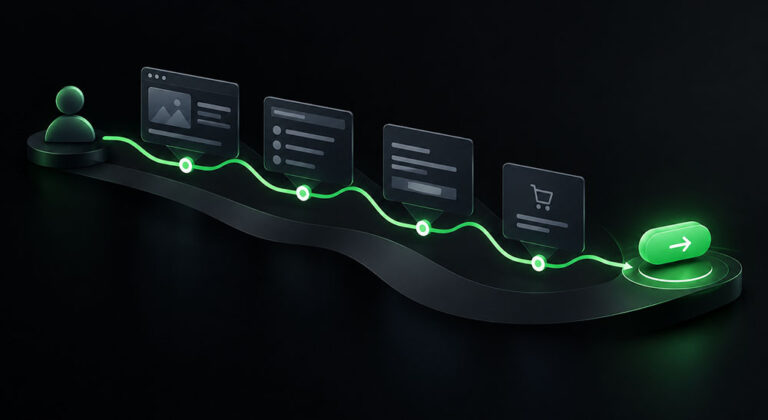
Message → Design → Navigation → Content → Trust → Interaction → Action
10 Reasons Your Website May Not Be Converting
1. Visitors Don't Understand What You Do
A visitor shouldn't need to investigate your website to understand your value.
Within seconds, they should understand:
What do you offer?
Who is it for?
Why should I care?
If your homepage answers none of these clearly, visitors have to work too hard.
And people don't usually reward websites for making them work.
2. Your Website Talks About You Instead of the Customer
Compare:
“We are a leading digital agency with extensive expertise…”
with:
“Turn fragmented digital experiences into a connected customer journey.”
The second statement starts with a problem.
Your website should connect your capabilities to customer outcomes, not simply list credentials.
3. There Is No Clear Next Step
A website can look beautiful and still fail commercially.
If every page ends without a meaningful action, the user is left wondering:
“What am I supposed to do now?”
Good conversion journeys create logical next steps.
For example:
Read → Understand → Explore → Trust → Enquire
4. Your CTAs Are Generic
“Submit.”
“Click Here.”
“Contact Us.”
These aren't necessarily wrong, but they often lack context.
A stronger CTA might be:
Discuss Your Requirement
Get a Project Consultation
Explore Our Capabilities
The CTA should tell the user what happens next.
5. You Don't Have Enough Proof
Customers are naturally cautious.
Especially when they're considering a high-value service.
Your website should reduce uncertainty with:
- Case studies
Client results
Testimonials
Certifications
Industry expertise
Relevant experience
Demonstrable work
The question isn't:
“How impressive are we?”
It's:
“Why should someone believe us?”
6. Your Website Doesn't Work Well on Mobile
A large portion of digital discovery happens on mobile devices.
If users have to pinch, zoom, scroll sideways or fight with menus, you're creating unnecessary friction.
Check:
- Font size
- Button size
- Navigation
- Forms
- Page speed
- Images
- Content hierarchy
- Mobile checkout
A responsive website isn't enough.
The mobile experience needs to be intentional.
7. Your Website Is Too Slow
Performance affects experience.
Large images, unnecessary scripts, poor hosting and inefficient code can create friction before users even see your message.
Website performance should therefore be treated as part of the customer experience, not simply a developer concern.
8. Your Landing Page Doesn't Match Your Campaign
Imagine clicking an advertisement promising:
“B2B Website Design”
and arriving at a generic homepage.
That's a disconnect.
The landing experience should continue the same:
Message → Offer → Design → Expectation
The smaller the gap between the promise and the experience, the easier the decision becomes.
9. Your Navigation Is Built Around Your Organization
Your internal structure isn't necessarily your customer's journey.
A company may organize services according to departments:
- Marketing
- Technology
- Design
- Consulting
But customers think in problems:
“I need more leads.”
“Our website doesn't convert.”
“We need to launch ecommerce.”
“Our brand looks outdated.”
Good information architecture starts with user intent.
10. You Don't Measure the Journey
A conversion doesn't happen in isolation.
You need to understand:
- Where did visitors come from?
- What page did they enter on?
- Where did they drop off?
- What content did they engage with?
- Which CTA did they click?
- Which source generated the qualified lead?
Analytics turns a website from a digital brochure into a measurable business asset.
The Conversion Formula
A useful way to think about website performance is:
Traffic x Experience x Trust x Clarity x Action = Conversion
If any one of these is weak, conversion can suffer.
You can have excellent traffic and poor conversion.
You can have beautiful design and poor conversion.
You can have strong content and poor conversion.
The website needs to work as a system.
CRO Is Not About Manipulating Users
Good conversion optimization isn't about tricking people into clicking.
It's about removing unnecessary friction.
That means:
- Making information easier to find
- Making decisions easier
- Making value clearer
- Making trust visible
- Making forms simpler
- Making navigation intuitive
- Making the experience faster
The best conversion experience often feels almost invisible.
The customer simply gets what they need.
A Practical Website Conversion Audit
Ask these questions:
First impression
- Can someone understand the business within five seconds?
- Is the value proposition clear?
- Navigation
- Can users find what they need quickly?
- Does the navigation reflect customer intent?
Content
- Does the page answer the questions customers actually have?
- Is the copy focused on outcomes?
Trust
- Are there relevant case studies?
- Are results visible?
- Are credibility signals easy to find?
Conversion
- Is there a clear CTA?
- Does every important page have a next step?
- Are forms unnecessarily long?
Performance
- Is the site fast?
- Does it work well on mobile?
Measurement
- Are conversions tracked?
- Can you identify which channels generate qualified leads?
If several answers are “no,” your website probably has a conversion problem—not a traffic problem.
Your Website Is Part of Your Sales Team
Your website works before your sales team enters the conversation.
It explains your offering.
It answers questions.
It builds confidence.
It handles objections.
It demonstrates expertise.
It creates the next step.
That's why website optimization should not be treated as a cosmetic redesign.
A better website isn't simply prettier.
It's easier to understand, easier to trust and easier to act on.
How nZeroOne Approaches Digital Experience
nZeroOne combines strategy, UX/UI, web development, content, SEO, performance marketing, analytics and technology to create digital experiences designed around real business outcomes.